At The Littlest Lives Rescue, we see senior rabbits arrive with very different histories, from lifelong pets to those experiencing safety and companionship for the first time. And as our recent intake data shows (shared later in this blog), senior rabbits are arriving at rescues in steady numbers which some may find surprising.
Here we explore how we can best support our bunnies as they age.
The key takeaways
- Senior buns make wonderful companions and are very rewarding to care for.
- All bunnies need a friend and thrive with companionship.
- Keep diet simple and supportive – hay, hay and more hay(!), consider senior nuggets and/or probiotics, and provide easy access to fresh water.
- Small home tweaks help – low-entry litter trays, non-slip flooring, gentle ramps, and soft resting spots improve mobility and comfort.
- Regular vet checks matter – 6-monthly check-ups catch dental disease, arthritis and other changes early. Many senior buns need long-term pain relief but hide pain well.
- Enrichment is important – foraging, toys and safe exploration keep bunnies happy and stimulated.
- Some pet insurers now offer no upper age limit for bunnies, so get it while you can!
- Be prepared for palliative care – comfort and compassion are key as they near the end of life.
Entering the senior years
Every rabbit ages differently, but there are common changes that we see.
Slower mobility: Arthritis and spondylosis are incredibly common in older rabbits. You may notice
- reluctance to jump, “meerkat”, zoom, or binky
- stiff or clumsy movement
- difficulty using litter trays
- difficulty keeping themselves clean
Dental changes: A rabbit’s teeth grow continuously, and age can make dental issues more frequent. Watch out for
- dropping food
- selective eating
- messy bottoms caused by discomfort
Changes to vision and/or hearing
- Are they going deaf or being ignorant? Who knows with these bunnies! It is super important to have your bunnies’ ears checked at their vet visits – ear disease is incredibly common in lop eared rabbits.
- If you suspect your rabbit’s vision isn’t what it used to be, keep their environment as consistent and routine as possible to help them navigate confidently.
Healthy eating for older buns
A good diet supports every aspect of healthy ageing in all species. As bunnies age, you may notice that they lose weight or muscle mass.
High fibre is essential, so hay should remain the main part of their diet to keep the gut moving.
Senior nuggets, such as Burgess Excel Mature or Science Selective Mature, include added joint and mobility support (e.g. glucosamine) which, alongside prescribed medication, may help keep joints more comfortable.
Because older bunnies can experience a slowing digestive system or issues with excess cecotropes, it can be helpful to introduce a probiotic (e.g. Protexin).
Providing a large water bowl (if they don’t already have one) also helps by improving gut hydration and encouraging drinking.
Creating a senior-bun-friendly environment
Small adjustments can make a huge difference to the lives of senior bunnies.
In the rescue we tend to use low-entry trays, such as large potting trays. These have a low entrance to help buns move in and out with ease, and they provide enough room for multiple friends to snuggle up!
Non-slip flooring is important for many buns, not just senior ones. Carpet runners, rugs, or vet bed help prevent slips and build confidence.
Swap jumps or steep slopes for ramps with grip or staggered steps and keep favourite areas easy to reach. Provide plenty of soft, cosy resting spots to help support their joints while relaxing.
These are common adaptations we make in our foster homes and the improvements in mobility and confidence are often remarkable.
Playtime for senior buns
Older bunnies deserve just as much fun and enrichment as their younger counterparts! Some buns love to be a menace to society no matter their age, but all bunnies enjoy foraging, a variety of toys, and supervised free roam time to keep their minds active.
Bonded companions
Senior rabbits absolutely blossom when paired with a friend or two. We’ve seen many older bunnies who lived lonely, quiet lives suddenly zoom and act like baby buns once they find companionship. Senior bunnies can form incredibly strong bonds – companionship of another rabbit is still a welfare requirement for them.
Routine health monitoring
Ageing rabbits’ benefit from regular vet care. We’d recommend a six-monthly check-in to cover:
- dental monitoring and ear checks
- urine output, caecotropes, and mobility
- appetite and water intake
- early intervention for chronic conditions such as arthritis and ear disease
Pain management (e.g. anti-inflammatory medication prescribed by a vet) can transform quality of life for senior rabbits with sore joints.
Though we hate to think of it, someday our beloved bunnies will pass over the rainbow bridge. Part of caring for older bunnies often involves elements of palliative care and knowing when it’s the right time to say goodbye.
In humans we advocate for advanced care planning, and we can apply this to our bunnies, as having a plan in place can often make a difficult situation a little easier to deal with. Advanced care planning for an older bunny is very similar in spirit to human advance care planning – it’s about thinking ahead, understanding what “quality of life” means for that individual rabbit, and making compassionate, informed decisions before a decline. We have produced an advanced care plan template that you can download from our website, if this is helpful to support you.
The Blue Cross provides a phoneline to support pet owners who have experienced loss: https://www.bluecross.org.uk/pet-loss-support
Why senior rabbits are wonderful companions
Older rabbits are often overlooked for adoption as they may require daily medication (which many take from a syringe like it’s a treat!). But they are some of the most rewarding animals to welcome into your home.
Senior buns tend to be big characters who leave a huge mark on our hearts. When you adopt a senior bunny, you give them the life they always deserved. At the rescue, we’ve seen seniors go from sad and quiet to confident, relaxed and full of personality once they feel safe with friends by their side.
The data
Supporting senior rabbits is a common part of our work at The Littlest Lives Rescue. Here’s what our recent intake data shows:
- 2024: We were asked to take 24 rabbits aged 6+
- 2025: We were asked to take 22 rabbits aged 6+
- 2026 Jan-April: We were asked to take 8 rabbits aged 6+
Even with small year-to-year variation, these numbers highlight a consistent need for rescue spaces for older rabbits. The oldest rabbit on our waiting list is currently 10 years old. Though we are still early in 2026, the number of senior rabbits needing help remains significant.
It’s important to note that these figures do not include rabbits where age was missing from the surrender form. Rabbits listed as “unknown age” are also not included, meaning the true number of senior intakes is likely higher. Many surrendered rabbits are estimated to be senior based on body condition and clinical signs, but unless stated by the previous owner, they are excluded from these totals.
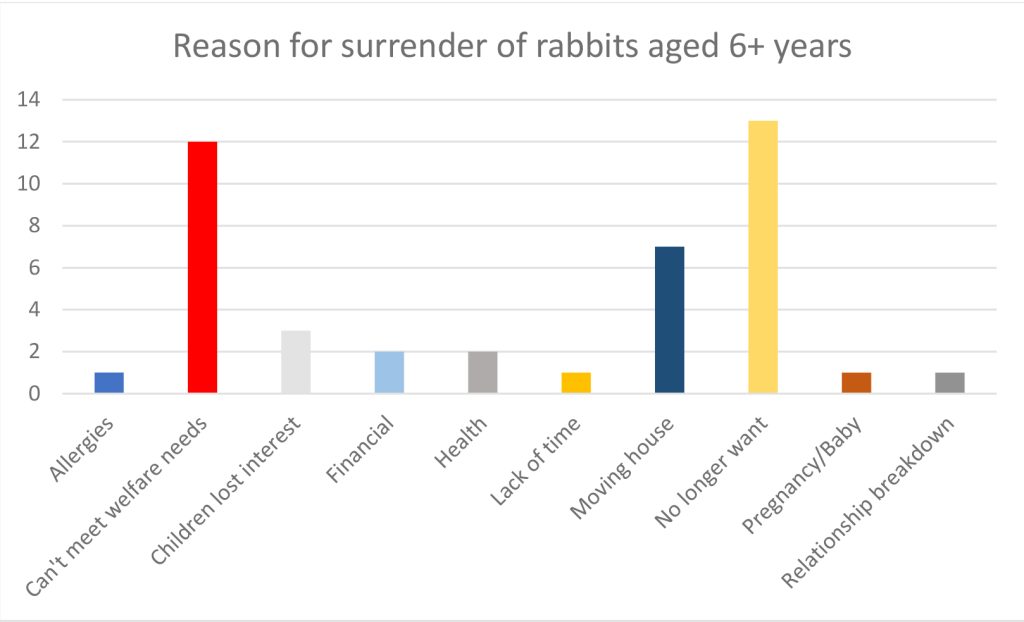
To better understand why senior rabbits come into rescue, we charted the most common surrender reasons for bunnies aged 6 years and over.
Case study – My sheepy Arnold
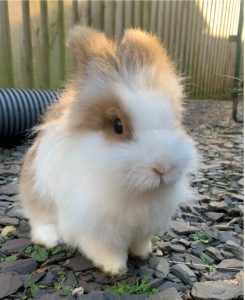
Arnold came into our lives unexpectedly. We were collecting a donation of rabbit food from Facebook Marketplace when we were offered an 8 year old lionhead who was no longer wanted and we couldn’t walk away.
He had been living in a 4ft hutch, balding and smothered in fleas, having been sadly separated from his companion following a relationship breakup. Arnold was an extreme breed, sadly prone to health issues, and he looked defeated. But beneath the flea dirt and sadness was a twinkle in his eye.
Once his fleas were treated, his fur began to grow back and he gained a little weight, we noticed Arnold struggled to pick up some foods and couldn’t manage hay well. A vet check confirmed he needed a dental (non-urgent), so we took the opportunity to bond him with a companion while we waited.
At his dental, the vet found a large mass near Arnold’s heart, which wasn’t there at the last visit three weeks prior! This was sampled but returned inconclusive, so we made the decision to watch and wait to see if it impacted his quality of life. Three months later, during an urgent dental, Arnold’s heart stopped under anaesthetic. Thankfully, the vet brought him back, but he had a long recovery ahead.
We knew then that dental disease would eventually take our sweet boy, but he still had so much more living to do.
As time went on, Arnold became reluctant to jump up onto the sofa (one of his favourite cheeky behaviours as he dive-bombed off the back!) and was started on long-term Metacam for arthritis. When his companion sadly passed away, we bonded him with Belle – a palliative care bunny from The Littlest Lives Rescue who also needed special care. Arnold fell deeply in love. She encouraged him to eat more and the two became inseparable.
We moved to a local exotics vet for a more specialised eye on his care. At his first visit he was prescribed further pain relief medications for spondylosis and was also diagnosed with a stage 4-5 heart murmur. We began monitoring his breathing closely in case we needed to add in a heart medication, which was a difficult task when he was always on the move!
With the right pain relief, Arnold rediscovered his zest for life. He tore around the garden like a toddler on a sugar high, giving us a mini heart attack with every joyful sprint, binky and digging foray.
As he aged further, Arnold gradually lost weight, his once sheepy, fluffy coat thinning into large, dry, bald patches. He took his three pain medications every morning with enthusiasm – they were his very special, delicious treats.
Sadly one day Arnold wasn’t his cheeky self. He was admitted for the day and it became clear that his dental disease was finally getting the better of him. He perked up briefly, but the spark faded. We made the heartbreaking decision to let him go – surrounded by love, peacefully, pain-free, with dignity.
Arnold was my soul bunny. A little menace, a huge character, and the perfect example of how senior rabbits, even those with complex medical needs, can live full, joyful lives when given the right care, a lot of love and a second chance.
If you’re interested in welcoming an older rabbit into your home, or if you’d like to chat about caring for your senior bun, The Littlest Lives Rescue team is here to help.