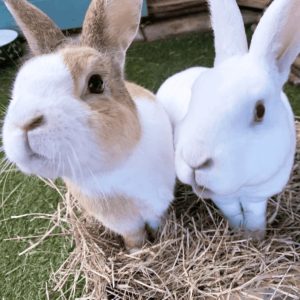
Research has shown that rabbit owners are much less likely to provide preventative healthcare to their rabbits in comparison to dog and cat owners. Preventative healthcare includes things such as vaccinations and neutering which are both important for rabbits.
Vaccinations
Vaccinations are one of the main reasons to take your rabbit to the vet. They are extremely important, as they protect against serious diseases such as myxomatosis and rabbit viral haemorrhagic disease. These diseases are often fatal, which is why it is essential to ensure rabbits are vaccinated and receive their annual booster vaccinations.
Only around 50% of owners regularly vaccinate their rabbits. Common reasons for not vaccinating include the belief that it is unnecessary, particularly if the rabbit does not interact with other animals, as well as concerns about cost or perceived risk. This is a misconception, as these diseases are not only transmitted through direct contact with other animals but can also be spread indirectly, for example via insects, contaminated materials, or even on human clothing. This is why vaccination is important for both indoor and outdoor rabbits.
Neutering
Another common reason a rabbit may visit the vet is for neutering. Sadly, a significant proportion of rabbits are still not neutered, with estimates suggesting around 40% remain unneutered in the UK. It is extremely important for rabbits to be neutered, regardless of whether they live alone or with others. Neutering can help reduce behavioural issues such as spraying and aggression, and it also has important health benefits. For example, it can significantly reduce the risk of reproductive cancers, which are particularly common in unneutered female rabbits.
GI Stasis
Gastrointestinal (GI) stasis is one of the most serious conditions rabbits can experience. It is important to understand that GI stasis is not a diagnosis, but a symptom of an underlying issue that requires urgent investigation. It occurs when the digestive system slows down or stops, which can quickly become life-threatening, so it should always be treated as an emergency.
Other conditions
In addition to this, rabbits are prone to a range of other health conditions that may require veterinary care. These include E-Cuniculi (EC), dental disease, parasites such as mites, and preventative care needs like microchipping and flystrike treatment.
This is not an exhaustive list, and conditions can range from routine issues to emergencies. As rabbits often hide signs of illness, prompt veterinary attention is essential whenever you feel your bunny is not behaving their normal self!