Providing suitable accommodation is one of the most important aspects of rabbit care. While hutches are often seen as the traditional option, modern welfare advice makes it clear that a hutch alone is not enough. Rabbits are active, intelligent animals that need plenty of space to move around, explore, and express natural behaviours such as running, jumping, digging, and standing upright.
The Rabbit Welfare Association & Fund (RWAF) recommends a minimum living space of 10ft x 6ft x 3ft. This gives rabbits enough room to stretch out, perform several full hops (which can cover 6–7 feet), and keep their eating, sleeping, and toileting areas separate.
Aviaries
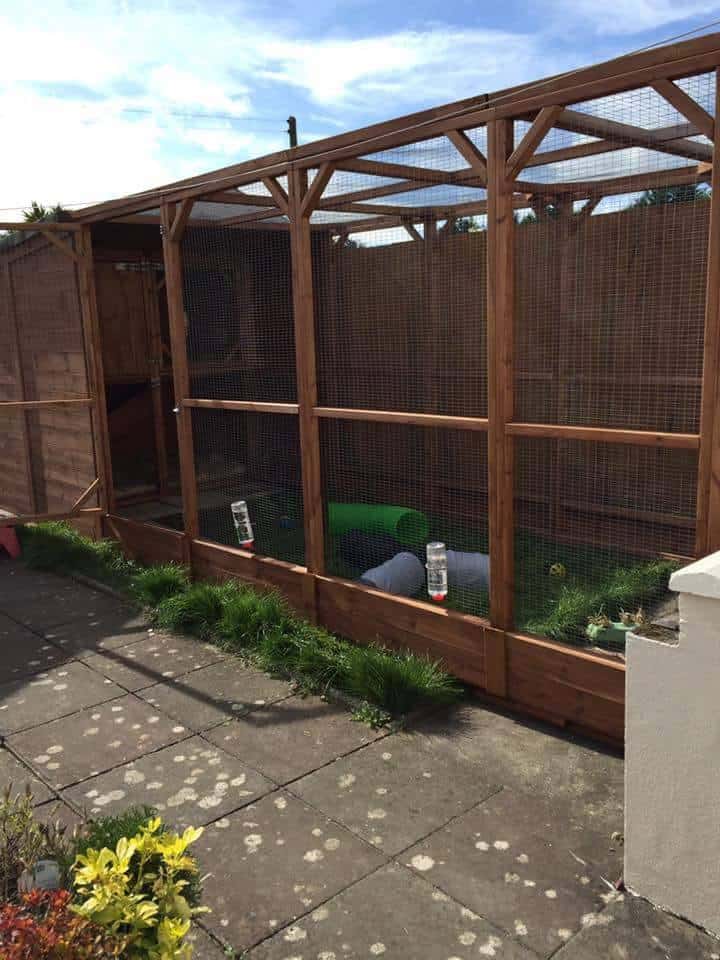
A walk-in aviary setup can provide an excellent, spacious environment for rabbits, particularly when adapted with their needs in mind. These enclosures allow owners to enter the space, making cleaning, feeding, and interaction much easier, while giving rabbits plenty of room to move freely and express natural behaviours. When used for rabbits, aviaries should include solid flooring or dig-proof measures, sheltered areas for protection from weather, and enrichment such as tunnels, platforms, and hiding spaces. The height of an aviary allows for added features like raised lookout areas, which many rabbits enjoy. As with any outdoor setup, it is essential to ensure the structure is fully predator-proof and provides adequate shade, ventilation, and shelter. When properly set up, walk-in aviaries can offer a safe, enriching, and practical alternative to traditional housing.
Purpose built rabbit housing
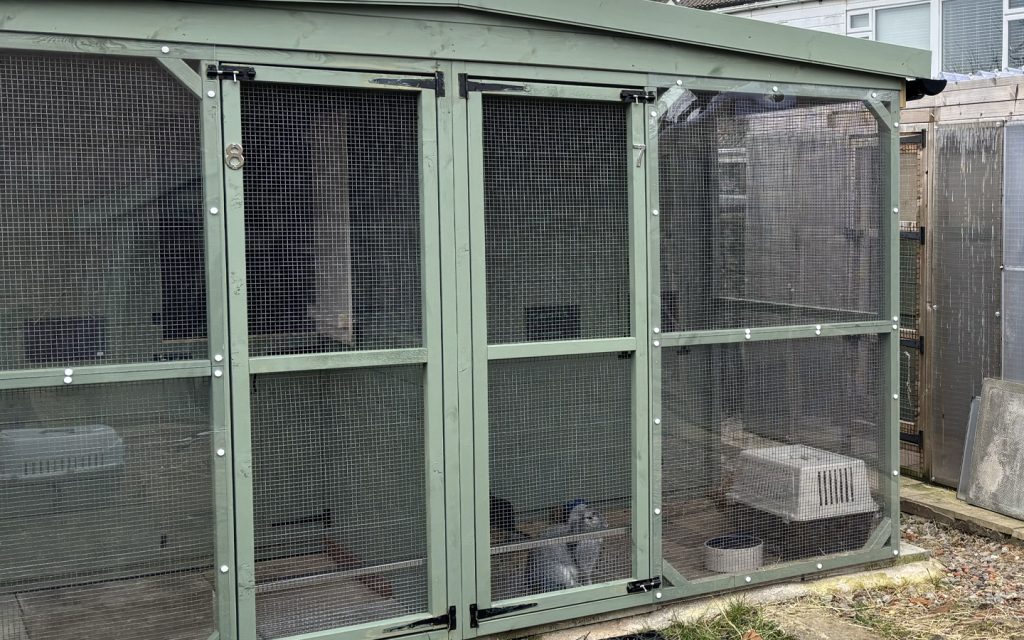
Purpose-built rabbit housing, such as those designed by companies like Happy Habitats Home and Garden or 4wire, can offer a high-quality, ready-made solution for rabbit owners looking to provide a safe and spacious environment. These setups are specifically designed with rabbit welfare in mind and often combine a sheltered sleeping area with a permanently attached run, allowing rabbits constant access to exercise. They are typically constructed from durable, weather-resistant materials and include secure, predator-proof mesh, making them a reliable long-term option. Many designs also incorporate easy-access doors for cleaning and interaction, as well as good ventilation and natural light. While they can be more expensive than traditional hutches, purpose-built enclosures provide a practical and well-considered alternative that meets modern welfare recommendations and can greatly improve a rabbit’s quality of life.
Hutches
Hutches can still be used, but they should only form part of a larger living setup. They are best thought of as a shelter rather than a complete home.
If you are using a hutch, it should:
- Be as large as possible (bigger is always better, 6’x2’)
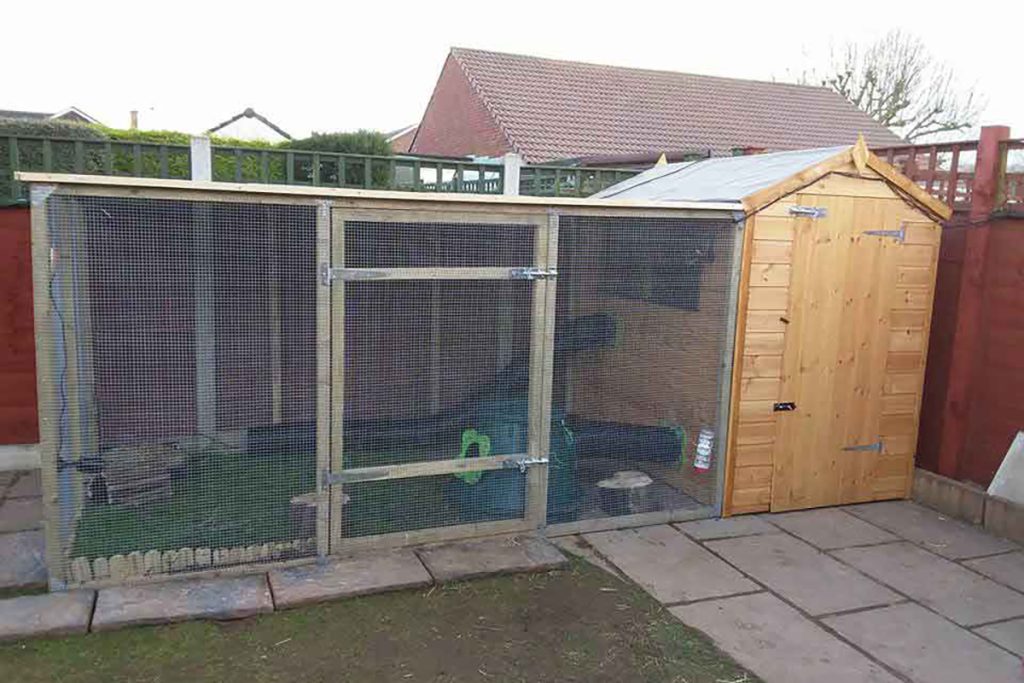
- Be attached to a secure, permanent run (if using a 6’x2’ hutch then the run needs to be minimum 8’x6’ giving total of 60sqft permanent access)
- Provide protection from weather and predators
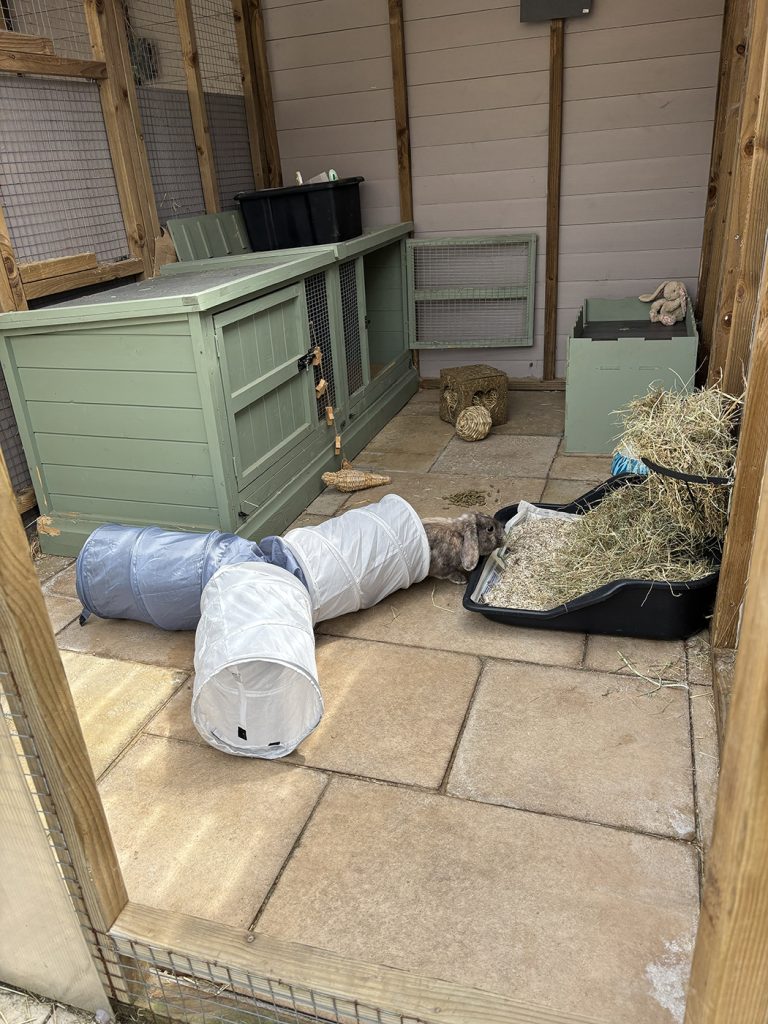
- If using as a hide in an aviary, we suggest removing the doors at the bottom, adding lino to the floors and giving it a coat of paint (Cuprinol Garden Shades). This will give the rabbits access without the doors being a hinderance and the lino and paint will protect the wood and make cleaning much easier.
Keeping rabbits confined to a hutch without additional space is not suitable and can negatively affect their health and wellbeing. Please also be aware that most hutches on the market do not have predator proof wire installed, so usually needs upgrading to 16g.
Runs and outdoor space
Rabbits need regular access to a safe and secure exercise area. A run allows them to move freely, explore, and stay physically and mentally healthy.
A good run should:
- Be spacious enough for free movement, making sure the total available space is a total of 60sq ft.
- Be secure from predators and digging
- Include shaded areas for protection from heat
Permanently attached runs, allow rabbits to always have access to exercise. As they are crepuscular, they will generally be running around very early in the morning and late at night, so need this amount of space available at all times.
Supervised free-ranging in a secure garden can also be very beneficial but should only be done when risks are carefully managed.
Thinking outside the box
Shed or Playhouse Setups
Converted sheds or children’s playhouses are increasingly popular, as they offer far more space and flexibility than traditional hutches.
These setups allow you to:
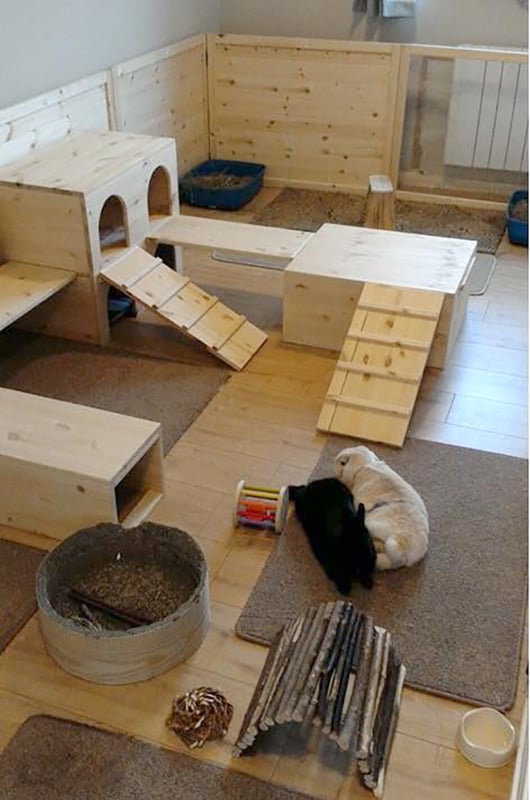
- Create a larger, more enriching living space
- Store food, bedding, and equipment neatly
- Make cleaning easier with suitable flooring such as lino
- Add enrichment items like tunnels, platforms, and hiding areas
Good ventilation and natural light are essential, so windows or stable doors are ideal. Any openings should be covered with predator-proof mesh for safety.
House Rabbits
Keeping rabbits indoors can be a very rewarding experience. Many rabbits can be litter trained and enjoy interacting with their owners.
However, it’s important to be aware that:
- Rabbits naturally chew, so homes must be fully bunny-proofed
- Hay can be messy but must always be available
- Even litter-trained rabbits may occasionally leave droppings
Rabbits are not low-maintenance pets, and they still require companionship and enrichment.
Enrichment and stimulation
Rabbits are curious, intelligent animals that need mental stimulation to stay happy. A lack of enrichment can quickly lead to boredom.
You can improve their environment by providing:
- Tunnels and hiding spaces
- Platforms or lookout areas
- Safe chew items such as cardboard or willow toys
- Opportunities for foraging and exploring
Simple additions like cardboard boxes filled with hay, tubes, or digging boxes can make a big difference. Rotating toys and introducing new items regularly will help keep things interesting.
Final thoughts
Good rabbit accommodation is about much more than just providing shelter. It should give rabbits space, safety, companionship, and opportunities to behave naturally.
By creating a setup that encourages movement, exploration, and enrichment, you can ensure your rabbits live healthy and fulfilling lives.