Rabbits may be small animals, but they are built for movement. In the wild, they cover several miles each day as they forage, explore, and interact with their group. Their bodies are designed for speed and agility: powerful back legs for sprinting, flexible spines for twisting mid‑air, and strong muscles that allow them to leap impressively high. Domestic rabbits still have these same instincts and physical needs. When given enough room, they will run, hop, zoom, and binky — behaviours that are not only joyful to watch but also vital for their physical and mental wellbeing.
A small enclosure simply cannot meet these needs. Rabbits kept in cramped spaces are unable to stretch fully, let alone run or jump. Over time, this lack of movement can lead to frustration, boredom, and stress. Rabbits are intelligent animals, and when they cannot express their natural behaviours, their quality of life suffers. Providing ample space is one of the simplest and most effective ways to keep them mentally stimulated and emotionally content.
Space is also closely linked to physical health. Rabbits that cannot exercise are far more likely to become overweight. Obesity in rabbits is a serious welfare concern and can lead to a range of secondary health issues, including mobility problems, heart strain, and difficulty grooming. Another common issue linked to limited movement is bladder sludge, a condition where thickened urine accumulates in the bladder. This can be painful and may require veterinary treatment. Regular movement helps keep the bladder functioning properly and reduces the risk of this condition developing.
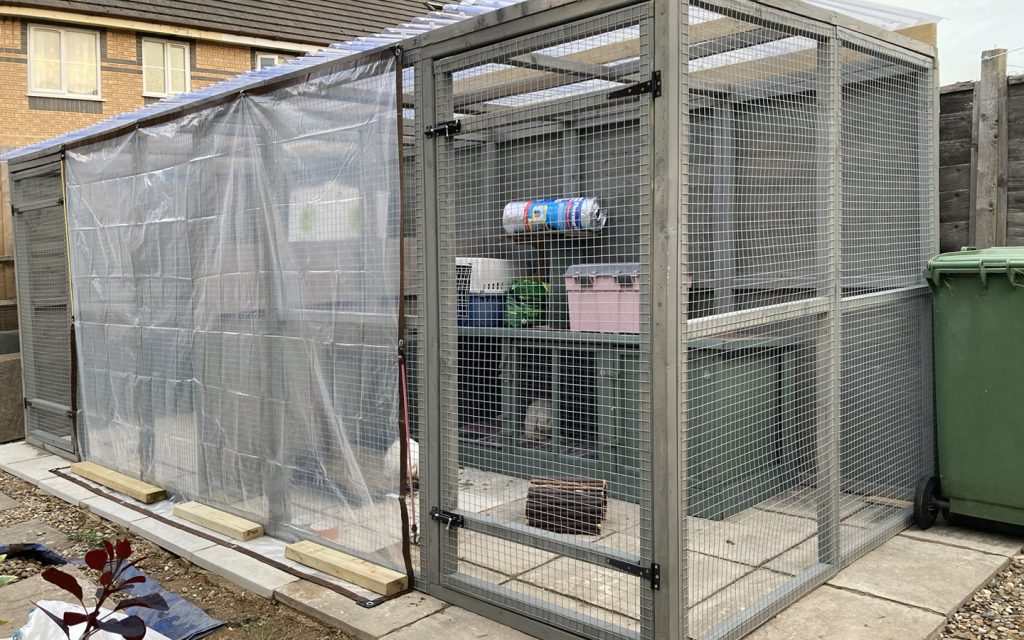
Fortunately, there are many ways to create a spacious environment for your rabbits, whether they live indoors or outdoors. Indoor rabbits often thrive as free‑roam pets once the home is safely bunny‑proofed. This allows them to explore, play, and interact with their surroundings throughout the day. Outdoor rabbits can enjoy large, secure setups such as converted sheds, playhouses, aviaries, or runs. If you don’t have one large area, you can connect multiple spaces using tunnels, giving your rabbits more room to explore while keeping them safe.
Providing space isn’t just about meeting a minimum measurement — it’s about giving rabbits the freedom to live in a way that feels natural to them. When rabbits have room to move, they become more confident, more active, and more expressive. You’ll see more playful behaviour, more curiosity, and more interaction with their environment and with each other. Space allows rabbits to be rabbits.
Ultimately, offering a large, enriching environment is one of the greatest gifts you can give your pets. Rabbits bring so much joy into our lives, and ensuring they have the space they need is a simple way to honour that bond and give them the happy, fulfilling life they deserve.