

Encephalitozoon cuniculi (EC) is a parasitic condition commonly found in domestic rabbits. A large proportion of rabbits carry the parasite without showing any symptoms and it can remain dormant until stress, illness or other triggers cause it to flare up. The Littlest Lives Rescue currently has 21 EC-positive rabbits in their care, with 16 more confirmed cases previously. This report summarises the prevalence of EC in rabbits at The Littlest Lives Rescue, including data collected from 2023-2025, and draws on two contrasting case studies to demonstrate real-world outcomes. This report aims to encourage shared learning, welfare-focused decision-making and improved public understanding.

This is not intended to replace veterinary advice; it’s a summary of our rescue experience and figures to support awareness and informed discussion.
EC is a significant concern for welfare organisations due to its potential to cause illness including neurological issues and long-term disability. As well as the impact on the rabbit(s) themselves, these clinical impacts can limit rehoming opportunities or lead to delays in finding suitable adopters, as many people are hesitant to adopt rabbits with this condition. This topic is widely debated among veterinary professionals and rescues, and further research is needed to fully understand the condition.
EC is transmitted primarily through ingestion or inhalation of spores, most commonly (but not exclusively) from contaminated urine. Once inside the body, the spores spread via the bloodstream and invade various tissues, particularly the brain, kidneys and eyes. The parasite replicates and eventually causes cells to rupture leading to inflammation and tissue damage.
Neurological signs such as head tilt, weakness and balance difficulties arise from lesions in the brain or spinal cord while kidney involvement can lead to chronic renal changes. In the eyes EC may cause inflammation, cataracts and lens rupture.
Many rabbits carry EC without developing visible symptoms. Symptoms are most likely to emerge when the immune system is compromised such as during stress, illness, ageing or in poor living conditions, allowing the dormant parasites to activate. Importantly, bonded pairs do not always both show symptoms and in some cases only one rabbit has an active infection.
EC spores are highly resilient in the environment. They can persist for up to three months with survival influenced by temperature and moisture. This environmental persistence emphasises the need for strict cleaning regimes in rescue settings and for owners to maintain good hygiene to reduce the risk of re-infection.
These signs are frequently associated with an EC infection, particularly when neurological or renal systems are affected:
The below signs occur less frequently but are supported in clinical literature, widely recognised in practice or commonly reported in rescue and owner experience:
Veterinarians begin with a full physical examination alongside taking a detailed clinical history. A blood test is commonly used to assess exposure to EC. This measures:
A wider blood panel can also be helpful. Elevated creatinine or urea may indicate kidney involvement and knowing these values can help to guide treatment decisions.
As EC is highly infectious and can be easily passed between rabbits, it is important to identify an infection as early as possible as early treatment can make a significant difference.
To better understand the impact of EC within the rescue, we reviewed internal data from rabbits over the past three years. The Littlest Lives Rescue began routinely testing for EC in 2023 as our awareness of the condition and its welfare implications increased. Since then, we have tested 50 out of 220 rabbits entering the rescue (22.7%).
Of those tested, 37/50 (74%) were EC-positive and 13/50 (26%) were EC-negative. This high proportion reflects our targeted testing approach – we only test rabbits where symptoms, history, or bond-related concerns provide a reason to do so and therefore this figure does not represent population-wide prevalence.
At present, 21 out of 47 resident rabbits (44.6%) are EC-positive. A summary of the main triggers for testing is provided in the table below, with the most common being a current or previous companion showing EC-associated symptoms.
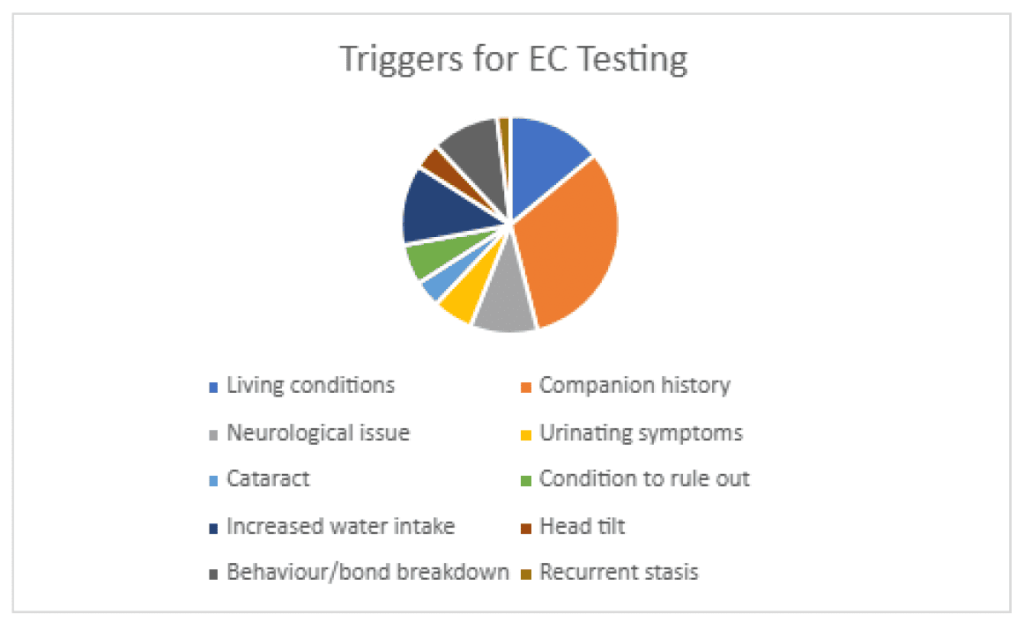
Our data is based only on rabbits tested for EC when clinical signs, history or bonding considerations indicated a need, meaning the sample is not representative of all rabbits entering our rescue. Routine testing for all bunnies is not financially feasible, so prevalence figures likely over-estimate true rates.
As a result, the findings should be interpreted as reflective of our tested population rather than the wider rescue intake.
It is important to recognise that improvement may be slow and that some neurological or renal changes may be permanent, even with appropriate treatment.
Routine treatment with Fenbendazole (brand name Panacur) is not recommended unless the rabbit has suspected or confirmed EC (or intestinal worms). Long-term or unnecessary use of Fenbendazole is associated with risks such as a low white blood cell count.
Medical treatment
Supportive care
Supportive therapy is essential, as EC commonly affects kidneys, neurological function and gut motility.
Supportive care can significantly aid recovery and improve quality of life.
Environmental management
Bunnies living with EC can go on to have long and happy life provided their caregivers have some knowledge of the condition and work closely with an experienced exotic vet.
While some neurological or renal changes may be permanent, many rabbits stabilise well once treated and with appropriate ongoing management the parasite often remains dormant without causing further issues.
Quality of life remains the primary consideration and many EC-positive rabbits enjoy a completely normal lifestyle once stabilised – binkying, zooming, exploring and behaving like any other rabbit.
Case Study: Mickey & Mavis
Mickey and Mavis arrived at The Littlest Lives Rescue in January 2023. Despite being a beautiful pair, they have struggled to find a forever home largely due to misconceptions surrounding EC.
In May 2024, Mickey suddenly went into gastrointestinal stasis and began to show slight but concerning neurological signs, including swaying from side to side. His fosterer immediately took him to the rescue’s preferred exotic vet. Mickey underwent full bloodwork and EC serology which confirmed an active EC infection.
Although his companion Mavis showed no clinical signs and did not test positive for an active infection, both rabbits were treated proactively. They each completed two 28-day courses of Panacur and repeat tests were performed to manage the infection and minimise the risk of reinfection.
Mickey responded extremely well to treatment. His neurological symptoms resolved, his mobility returned to normal and he has had no further EC-related issues since. With daily monitoring both rabbits have remained stable, active and happy.
Despite Mickey’s excellent recovery and otherwise great health, Mickey and Mavis have been searching for their forever home for over three years. Their long wait reflects the ongoing stigma around EC, rather than their suitability as companion animals. They are affectionate, entertaining
and friendly rabbits who demonstrate that with timely treatment, good care and understanding, EC-positive rabbits can live full and happy lives.
Case study: Luca
Luca arrived at The Littlest Lives Rescue in August 2025 after a period of being largely overlooked in his previous home, with no veterinary checks recorded beyond his initial vaccination and neutering. Soon after intake, it was noticed that both he and his companion Mabel were urinating outside their litter tray, prompting further investigation. They were tested for EC and both returned a positive result for active infection.
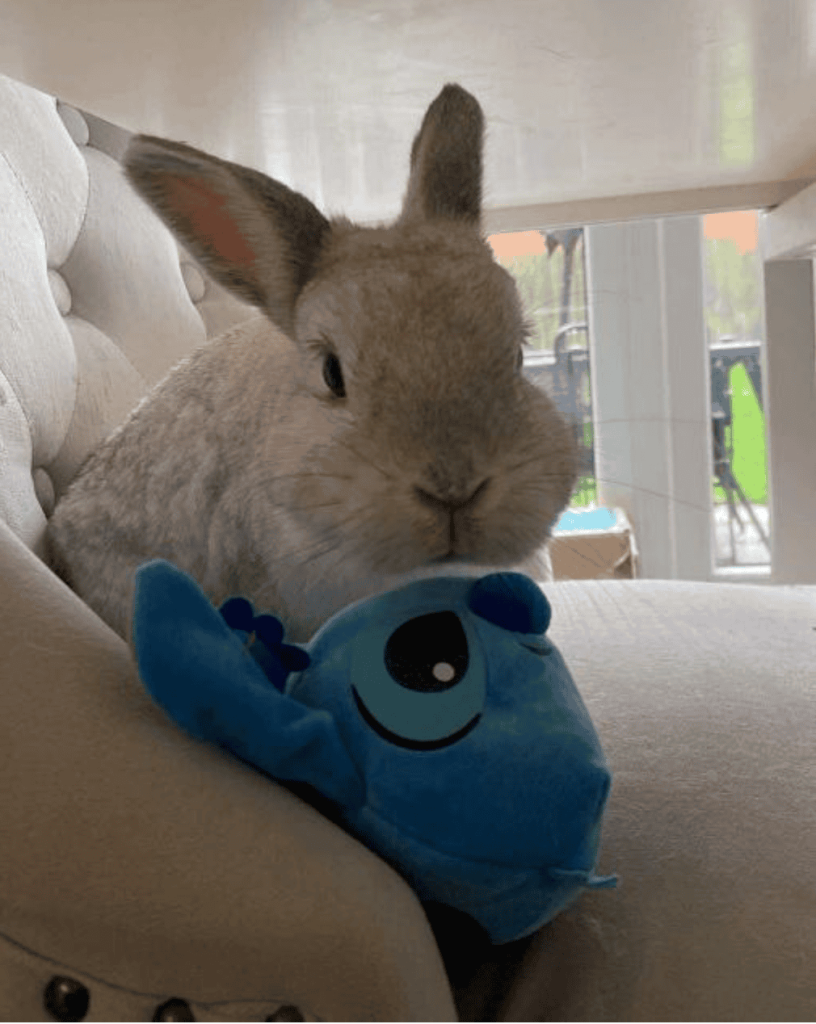
Despite receiving multiple full courses of Panacur and attentive supportive care, Luca’s infection proved persistent. His foster carers worked closely with the rescue and the exotic vet team working hard to reduce any risk of reinfection. While many rabbits respond well to treatment, including his companion Mabel, Luca’s case was complex and he struggled to clear the active infection.
In February 2026, Luca began experiencing seizures, indicating neurological progression of the disease. His devoted fosterers immediately took him to the exotic vet, prepared to make the kindest decision for his welfare. Sadly, Luca suffered further seizures at the practice. He passed peacefully in the arms of his besotted fosterers shortly after.
Although Luca’s story did not have the outcome we all hoped for, it represents an important reality – some rabbits arrive in rescue with significant, longstanding and untreated health issues that make recovery more difficult. Luca’s case highlights the critical importance of early veterinary intervention, responsible ownership and ongoing monitoring.
Luca was deeply loved by his foster carers and his story serves as a reminder that, even when treatment is not successful, welfare, comfort and kindness remain central to animal care.
As a small, volunteer-run charity, The Littlest Lives Rescue unfortunately does not have the funds to test every incoming rabbit for EC. In an ideal world, routine testing on intake would help reduce the risk of spread within domestic rabbits, but financial constraints mean this is not always possible. Instead, we focus on testing where symptoms, history, or clinical suspicion justify it and on educating adopters and the wider community about the risks, signs and management of EC.
As an ethical rescue, we follow a strict policy of only bonding EC-positive rabbits with other EC-positive rabbits to reduce the risk of spreading the disease within the wider population. To minimise the risk of EC flare-ups during bonding, we follow a clear bonding protocol.
Bonding can be a stressful process and stress is recognised as a trigger for an active EC infection. For this reason, each rabbit begins a course of Panacur two weeks before the bond, continuing throughout bonding to complete the full 28-day course. This precautionary approach helps lower the likelihood of stress-induced activation.
Because EC spores are environmentally resilient and able to survive up to three months good hygiene is an essential welfare measure in both rescue and home settings. Simple steps such as thorough cleaning can significantly reduce reinfection risk.
As a rescue, we see first-hand that EC is not a barrier to a good quality of life. With knowledge, timely treatment and ongoing care, most EC-positive rabbits can live long and happy lives. Rabbits like Mickey demonstrate how well many individuals can recover and thrive when their condition is identified and managed appropriately.
At the same time, cases like Luca’s remind us that some rabbits arrive in rescue with complex, longstanding, or untreated health issues that make recovery more challenging. His story highlights why early intervention, education and compassionate care are so vital.
By improving awareness and sharing real-world experiences, we can ensure that EC-positive rabbits are not overlooked and that with support they can be given the same chance as any other bunny to find the safe, loving homes they deserve.

Meet our adorable rabbits looking for loving forever homes today!

Learn essential tips for keeping your rabbit healthy, happy, and safe.

Discover meaningful ways you can support and empower our charity.
Meet our adorable rabbits looking for loving forever homes today!
Learn essential tips for keeping your rabbit healthy, happy, and safe.